As businesses grow, managing daily operations becomes increasingly complex. Departments like finance, sales, inventory, procurement, human resources, customer service, and accounting often rely on different software systems. When these systems don't communicate with each other, businesses experience data duplication, manual work, communication gaps, and operational inefficiencies.
This is where Enterprise Resource Planning (ERP) software becomes a game-changer. ERP software integrates all your core business processes into one centralized platform, helping teams collaborate better, automate repetitive tasks, and make informed decisions using real-time data.
In 2026, ERP software is no longer just for large corporations. Thanks to cloud technology, AI-powered automation, and scalable solutions, star tups and small-to-medium businesses (SMBs) are rapidly adopting ERP systems to improve productivity, reduce operational costs, and prepare for future growth.
In this guide, we'll explore the biggest benefits of ERP software, the essential features every ERP system should include, and why investing in a custom ERP solution can help your business stay ahead of the competition.
What Is ERP Software?
Enterprise Resource Planning (ERP) software is an integrated business management solution that connects multiple departments through a centralized database.
Instead of using separate applications for accounting, HR, inventory, sales, and customer management, businesses can manage everything from one platform.
An ERP system typically includes:
- Finance and Accounting
- Human Resources (HR)
- Inventory Management
- Customer Relationship Management (CRM)
- Procurement
- Manufacturing
- Sales Management
- Project Management
- Customer Support
- Supply Chain Management
By centralizing business operations, ERP software provides complete visibility into your organization and eliminates data silos.
Transform Business Operations with Custom ERP Software Development
As growing businesses manage increasing volumes of data, departments, and workflows, they need an ERP solution that centralizes operations and improves efficiency. Our Custom ERP Software Development services help businesses build scalable ERP solutions that integrate finance, inventory, HR, sales, and operations into a single platform, enabling better decision-making, streamlined processes, and long-term business growth. Codexxa specializes in building custom software and enterprise-grade solutions tailored to business needs.
Why Growing Businesses Need ERP Software
As your business expands, operations become more complex. More customers, employees, products, and suppliers mean more data to manage.
Without an ERP system, businesses often face challenges such as:
- Manual data entry
- Duplicate records
- Inventory inaccuracies
- Delayed reporting
- Poor communication
- Difficulty tracking business performance
- Increased operational costs
ERP software solves these issues by automating workflows and providing accurate, real-time information across departments.
1. Centralized Business Data
One of the biggest benefits of ERP software is that it stores all business information in one centralized location.
This allows employees to access the latest data without switching between multiple applications.
Benefits include:
- Improved collaboration
- Better data accuracy
- Faster access to information
- Reduced duplication
A centralized system also ensures that every department works with the same information, reducing confusion and improving efficiency.
2. Improved Operational Efficiency
ERP software automates repetitive tasks, reducing the need for manual intervention.
Common automated processes include:
- Invoice generation
- Purchase approvals
- Payroll processing
- Inventory updates
- Order management
- Customer records
Automation saves time, reduces errors, and allows employees to focus on higher-value activities.
3. Better Decision-Making
Modern ERP systems include dashboards and reporting tools that provide real-time insights into business performance.
Business owners can monitor:
- Sales performance
- Revenue
- Expenses
- Inventory levels
- Employee productivity
- Customer trends
With accurate and up-to-date information, managers can make faster and more informed decisions.
4. Increased Productivity
When all departments use the same platform, workflows become faster and more efficient.
Employees no longer need to:
- Re-enter data
- Search through spreadsheets
- Switch between different software
- Wait for manual approvals
This leads to higher productivity and better collaboration across the organization.
5. Enhanced Customer Experience
ERP software helps businesses deliver better customer service by providing complete access to customer information.
Businesses can:
- Track orders
- View customer history
- Respond to inquiries quickly
- Manage returns efficiently
- Improve communication
Satisfied customers are more likely to become repeat customers and recommend your business to others.
6. Improved Inventory Management
Managing inventory manually can result in stock shortages, overstocking, and unnecessary costs.
ERP software provides:
- Real-time inventory tracking
- Automated stock updates
- Low-stock alerts
- Warehouse management
- Demand forecasting
This helps businesses maintain optimal inventory levels while reducing waste.
7. Stronger Financial Management
ERP systems simplify financial management by integrating accounting with other business functions.
Benefits include:
- Automated invoicing
- Expense tracking
- Budget planning
- Tax reporting
- Financial forecasting
Finance teams gain better visibility into the company's financial health and can generate reports quickly.
8. Scalability for Business Growth
As your business grows, your software should grow with it.
A scalable ERP system allows businesses to:
- Add more users
- Open new branches
- Manage additional products
- Expand internationally
- Integrate new technologies
This flexibility ensures your ERP investment continues to deliver value as your organization evolves.
9. Better Data Security
Business data is one of the most valuable assets an organization owns.
Modern ERP systems protect sensitive information through:
- Role-based access control
- Data encryption
- Automatic backups
- Audit logs
- Multi-factor authentication
These security features help reduce cyber risks and support regulatory compliance.
10. Seamless Integration with Other Systems
ERP software can integrate with:
- CRM software
- Payment gateways
- eCommerce platforms
- Accounting tools
- HR management systems
- Mobile applications
- Business intelligence software
These integrations create a connected business ecosystem and improve operational efficiency.
Improve ERP Adoption with Digital Marketing Services
As businesses launch or modernize ERP solutions, they need effective marketing strategies to educate customers, generate qualified leads, and build trust in their software offerings. Our Digital Marketing Services help businesses increase online visibility through integrated SEO, content marketing, paid campaigns, and data-driven growth strategies that support long-term customer acquisition.
Essential Features Every ERP System Should Include
When choosing an ERP solution, look for features such as:
- User-friendly dashboard
- Financial management
- Inventory tracking
- CRM integration
- HR and payroll management
- Reporting and analytics
- Mobile accessibility
- Cloud deployment
- API integration
- Workflow automation
- Document management
Choosing the right features ensures your ERP system supports your business now and in the future.
ERP Trends in 2026
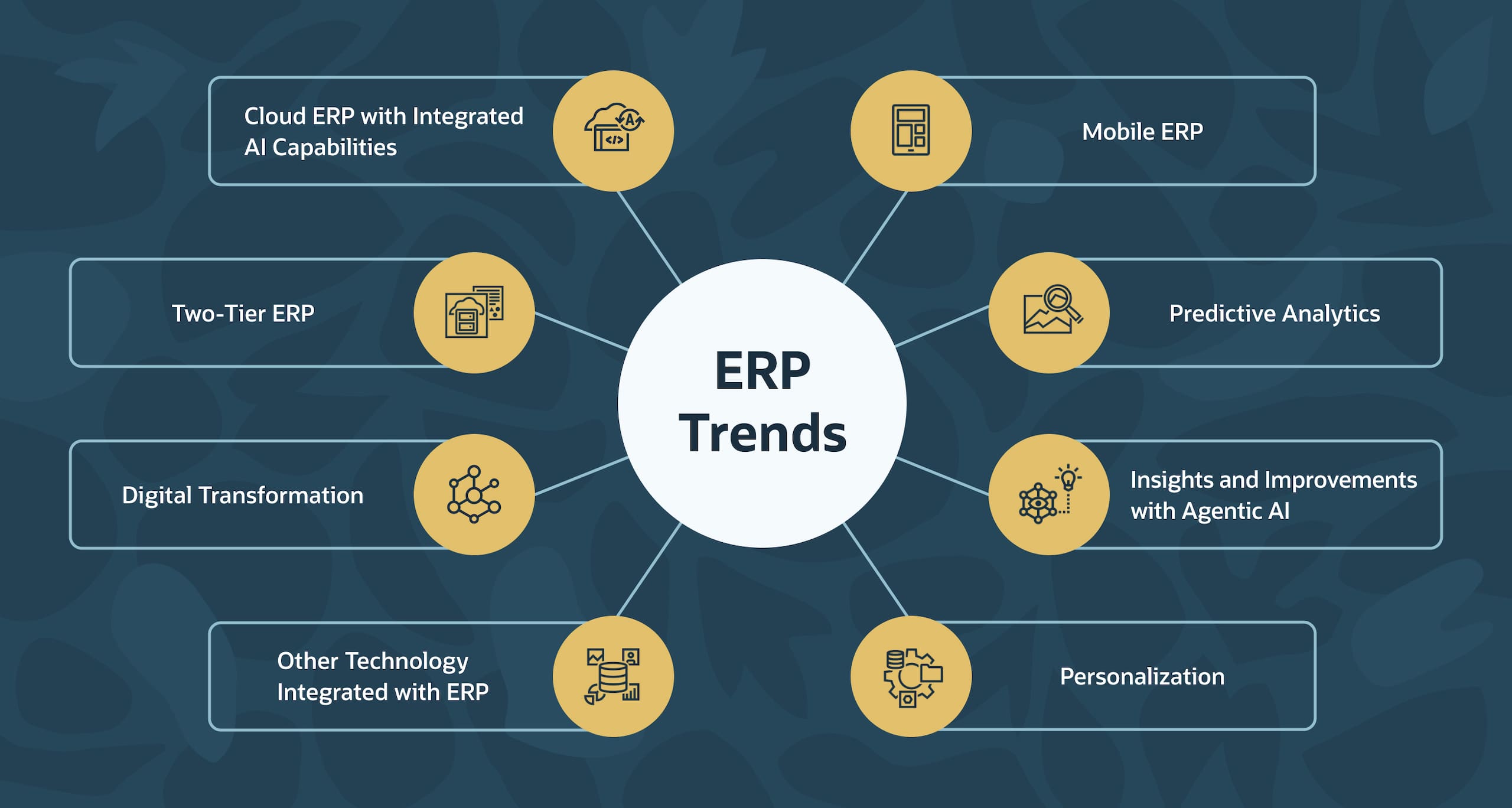
ERP technology continues to evolve with advancements in artificial intelligence and cloud computing.
Key trends include:
- AI-powered business insights
- Predictive analytics
- Cloud-based ERP platforms
- Mobile-first applications
- IoT integration
- Low-code customization
- Advanced cybersecurity
- Real-time analytics
Businesses adopting these innovations gain a competitive advantage by improving efficiency and responding faster to market changes.
Best Practices for Successful ERP Implementation
To maximize the benefits of ERP software:
- Clearly define your business goals.
- Choose a scalable solution.
- Train employees effectively.
- Migrate data carefully.
- Test the system thoroughly before launch.
- Monitor performance regularly.
- Work with an experienced ERP development partner.
A well-planned implementation ensures a smooth transition and better return on investment.
Why Choose Custom ERP Software?
While ready-made ERP solutions offer standard features, custom ERP software is built specifically around your business processes.
Benefits include:
- Personalized functionality
- Greater flexibility
- Seamless integrations
- Better scalability
- Enhanced security
- Improved user experience
- Long-term cost savings
Custom ERP software adapts to your business instead of forcing your business to adapt to the software.
Conclusion
ERP software has become an essential tool for businesses looking to improve efficiency, streamline operations, and support long-term growth. By integrating multiple business functions into a single platform, ERP systems eliminate data silos, automate workflows, and provide real-time insights that help organizations make smarter decisions.
Whether you're a startup or an established company, investing in a scalable and customized ERP solution can improve productivity, reduce operational costs, and prepare your business for future success. As digital transformation continues to reshape industries in 2026, implementing the right ERP software will help your business stay competitive and achieve sustainable growth.
Frequently Asked Questions (FAQs)
1. What is ERP software?
ERP software is a centralized system that integrates finance, HR, inventory, sales, and other business functions into one platform.
2. Why is ERP important for growing businesses?
ERP improves efficiency, automates processes, reduces manual errors, and helps businesses scale with better data management.
3. Can small businesses use ERP software?
Yes. Modern cloud-based ERP solutions are affordable, scalable, and designed specifically for small and medium-sized businesses.
4. Which industries benefit from ERP software?
Manufacturing, retail, healthcare, logistics, education, construction, finance, and many other industries use ERP software to streamline operations.
5. Is custom ERP software better than off-the-shelf ERP?
Custom ERP software is tailored to your business processes, offering greater flexibility, scalability, and seamless integration with existing systems.